
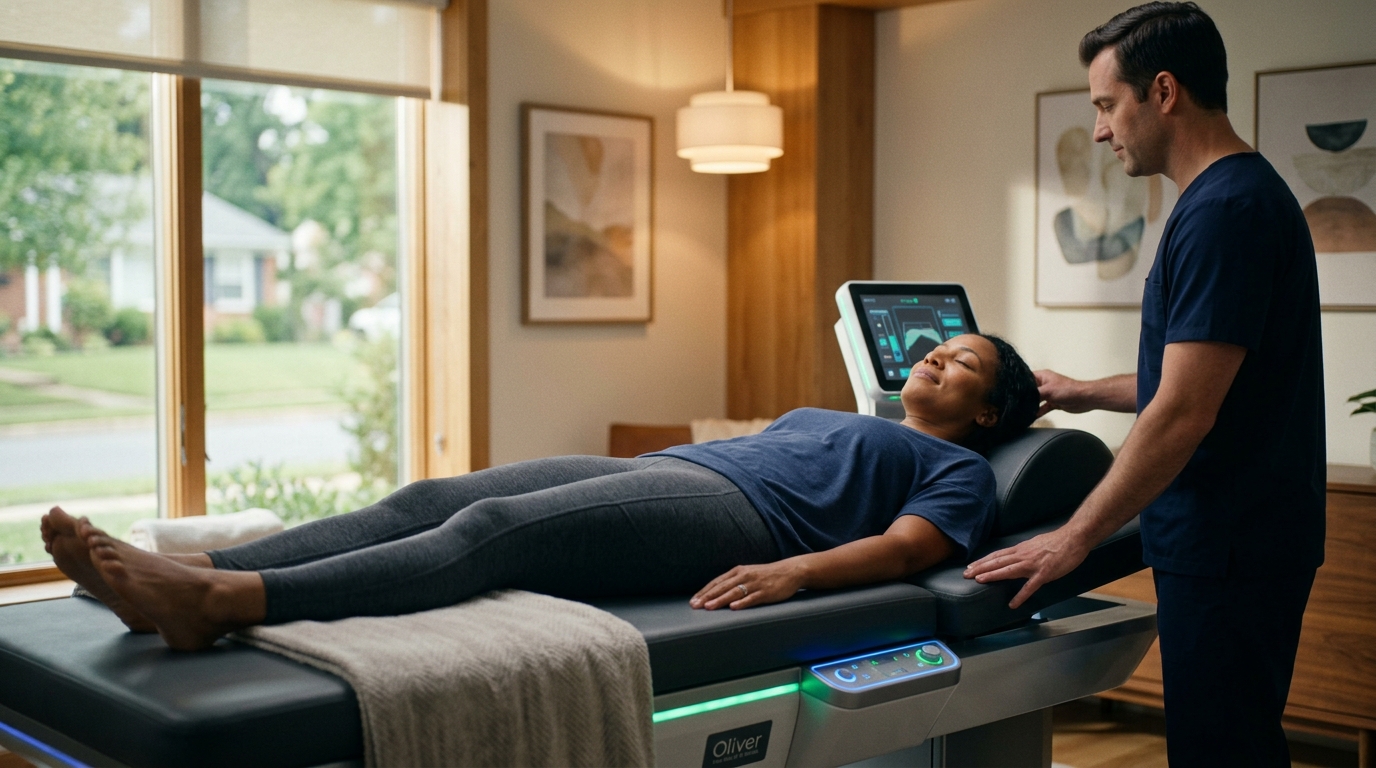
Chronic back pain affects approximately 80% of adults at some point in their lives, with disc-related issues being a primary culprit. According to the National Institute of Neurological Disorders and Stroke, disc degeneration and herniation are leading causes of disability worldwide. Understanding how spinal decompression therapy works for disc problems is essential for patients seeking non-surgical relief. This guide explores the mechanics, benefits, and clinical applications of this treatment at Oliver Pain Relief & Rehab in Herndon, VA.
The Mechanism: How Decompression Relieves Pressure
Spinal decompression therapy is a non-surgical treatment designed to alleviate pain in the neck and back. The core principle relies on creating a controlled, computerized distraction force that gently stretches the spine. This process is fundamentally different from traditional traction because it targets specific spinal segments without engaging the surrounding muscles in a protective spasm.
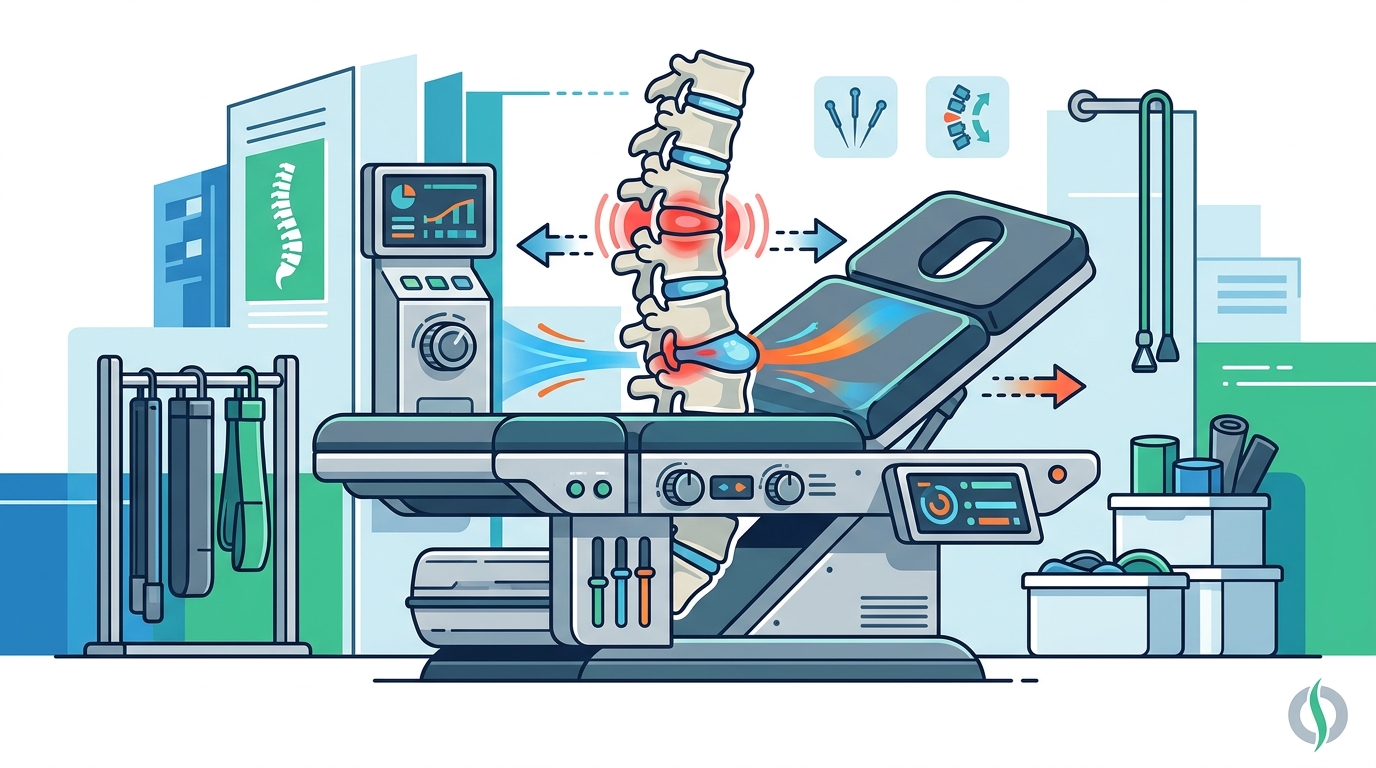
Spinal decompression is a therapeutic technique that uses motorized traction to stretch the spine. This stretching creates a vacuum effect within the intervertebral discs. When the pressure inside the disc drops, it can draw herniated or bulging material back toward its normal position. This reduction in intradiscal pressure allows nutrients and oxygen to flow into the disc, promoting healing and reducing inflammation around the affected nerves.
At Oliver Pain Relief & Rehab, we utilize advanced decompression technology to ensure precise force application. This precision is critical because it avoids the "bounce-back" effect often seen in manual traction, where the patient's muscles tighten in response to the pull, negating the therapeutic benefit. By bypassing this muscular resistance, the therapy can reach deeper into the spinal column to address the root cause of the pain.
Conditions Treated by Spinal Decompression
While often associated with lower back pain, spinal decompression therapy is effective for a variety of disc-related conditions. It is particularly beneficial for patients who have not found relief through conventional physical therapy or medication. The therapy works by reducing the load on the spinal structures, allowing the body's natural healing processes to take over.
Common conditions that respond well to this treatment include:
- Herniated Discs: When the soft inner material of a disc pushes out through a tear in the outer layer.
- Bulging Discs: A condition where the disc expands beyond its normal boundary but has not ruptured.
- Degenerative Disc Disease: The wear and tear of discs over time, leading to pain and stiffness.
- Sciatica: Pain that radiates along the path of the sciatic nerve, often caused by disc pressure.
- Facet Syndrome: Pain originating from the facet joints in the spine, often exacerbated by disc issues.
For patients in the Northern Virginia and Washington, DC area, accessing specialized care is vital for long-term mobility. Our back pain treatment protocols are tailored to address these specific structural issues. Additionally, for those suffering from neck pain, similar principles apply to the cervical spine, though with adjusted force parameters.
What to Expect During Treatment
Understanding the patient journey is crucial for setting realistic expectations. The treatment process is non-invasive and typically conducted in a clinical setting. Patients lie on a specialized table that is connected to a computer-controlled motor. The system is programmed based on the patient's specific condition, weight, and spinal alignment.
The treatment sessions usually last between 20 to 30 minutes. During this time, the machine applies a gentle pulling force to the spine. This force is intermittent, meaning it pulls and releases in a rhythmic pattern. This cycle prevents the muscles from adapting to the stretch, maintaining the therapeutic vacuum effect within the discs.
Most patients report a feeling of relief during the session, though some may experience mild discomfort as the body adjusts. A typical course of treatment involves multiple sessions over several weeks. The frequency and duration are determined by the severity of the disc injury and the patient's response to therapy. For more details on our approach, you can explore our spinal decompression service page.
Decompression vs. Traditional Traction
Many patients confuse spinal decompression with traditional traction. While both involve stretching the spine, the mechanisms and outcomes differ significantly. Traditional traction often applies a constant force, which can trigger the body's protective reflexes, causing muscles to contract and resist the pull. This resistance can limit the effectiveness of the treatment.
In contrast, spinal decompression therapy uses a dynamic, computerized approach. The force is carefully calibrated to stay below the threshold that triggers muscle guarding. This allows the therapy to target the disc directly without interference from the surrounding musculature. The result is a more effective reduction in intradiscal pressure and a greater potential for healing.
| Feature | Spinal Decompression Therapy | Traditional Traction |
|---|---|---|
| Force Application | Intermittent, computer-controlled | Constant, manual or mechanical |
| Muscle Response | Bypasses muscle guarding | Often triggers muscle contraction |
| Target Area | Specific spinal segments | Generalized spinal area |
| Therapeutic Goal | Disc rehydration and reduction | General stretching and relaxation |
Integrative Care at Oliver Pain Relief
At Oliver Pain Relief & Rehab, we believe in a holistic approach to pain management. Spinal decompression is rarely used in isolation. It is often combined with other therapies to enhance outcomes and accelerate recovery. This integrative model addresses not just the structural issue but also the surrounding soft tissue and nervous system.
Our team may incorporate acupuncture to help reduce inflammation and stimulate natural pain relief. Laser therapy can be used to promote cellular healing and reduce swelling. Additionally, physiotherapy and rehab exercises are prescribed to strengthen the core and support the spine post-treatment.
This comprehensive strategy ensures that patients receive the best possible care. By addressing multiple aspects of the injury, we help patients achieve lasting relief and return to their daily activities. For those interested in our full range of services, including auto injury relief, we offer personalized treatment plans.
Key Takeaways
- Spinal decompression creates a vacuum effect in discs to promote healing and reduce pain.
- The therapy is effective for herniated, bulging, and degenerative disc conditions.
- Unlike traditional traction, decompression bypasses muscle guarding for deeper therapeutic effect.
- Treatment sessions are non-invasive and typically last 20 to 30 minutes.
- Integrative care, including acupuncture and laser therapy, enhances recovery outcomes.
- Oliver Pain Relief & Rehab serves patients in Herndon, VA, and the greater Northern Virginia area.
- Consultation with a chiropractor is essential to determine if decompression is right for you.
Frequently Asked Questions
Is spinal decompression therapy painful?
Most patients find the treatment comfortable. While you may feel a gentle pulling sensation, it is generally not painful. The goal is to stretch the spine without triggering muscle spasms.
How many sessions are needed?
The number of sessions varies based on the severity of the condition. Typically, patients undergo 12 to 20 sessions over several weeks. Your chiropractor will create a customized plan.
Can spinal decompression fix a herniated disc?
Yes, it can help reduce the herniation by drawing the disc material back into place. It also promotes healing and reduces inflammation around the affected nerve.
Is it covered by insurance?
Many insurance plans cover spinal decompression therapy. We recommend checking with your provider or contacting our office for assistance with verification.
Who is not a candidate for this therapy?
Patients with certain conditions, such as fractures, tumors, or severe osteoporosis, may not be suitable candidates. A thorough evaluation is necessary to determine eligibility.
How does it differ from surgery?
Spinal decompression is non-surgical and non-invasive. It aims to heal the disc naturally, avoiding the risks and recovery time associated with surgical intervention.
What is the success rate?
Studies suggest high success rates for appropriate candidates. Many patients experience significant pain reduction and improved mobility after completing their treatment course.
Contact Us
If you are suffering from disc-related pain, do not wait for it to worsen. Early intervention can prevent further damage and accelerate your recovery. Oliver Pain Relief & Rehab is dedicated to helping you get your lifestyle back. We invite you to schedule a consultation with Dr. Chris Oliver to discuss your specific needs.
Visit our contact page to book an appointment or call us at (703) 904-8528. We are here to help you live pain-free.