
Chronic back pain affects millions of people globally, often stemming from compromised spinal discs that press against sensitive nerves. According to the National Institute of Neurological Disorders and Stroke, approximately 80% of adults will experience significant back pain at some point in their lives. This statistic highlights the critical need for effective, non-surgical interventions that address the root cause rather than just masking symptoms. Spinal decompression therapy has emerged as a leading solution for individuals suffering from herniated, bulging, or degenerated discs. By utilizing controlled traction forces, this treatment aims to create negative pressure within the disc space, allowing displaced material to retract and promoting natural healing processes.
The Mechanism of Action
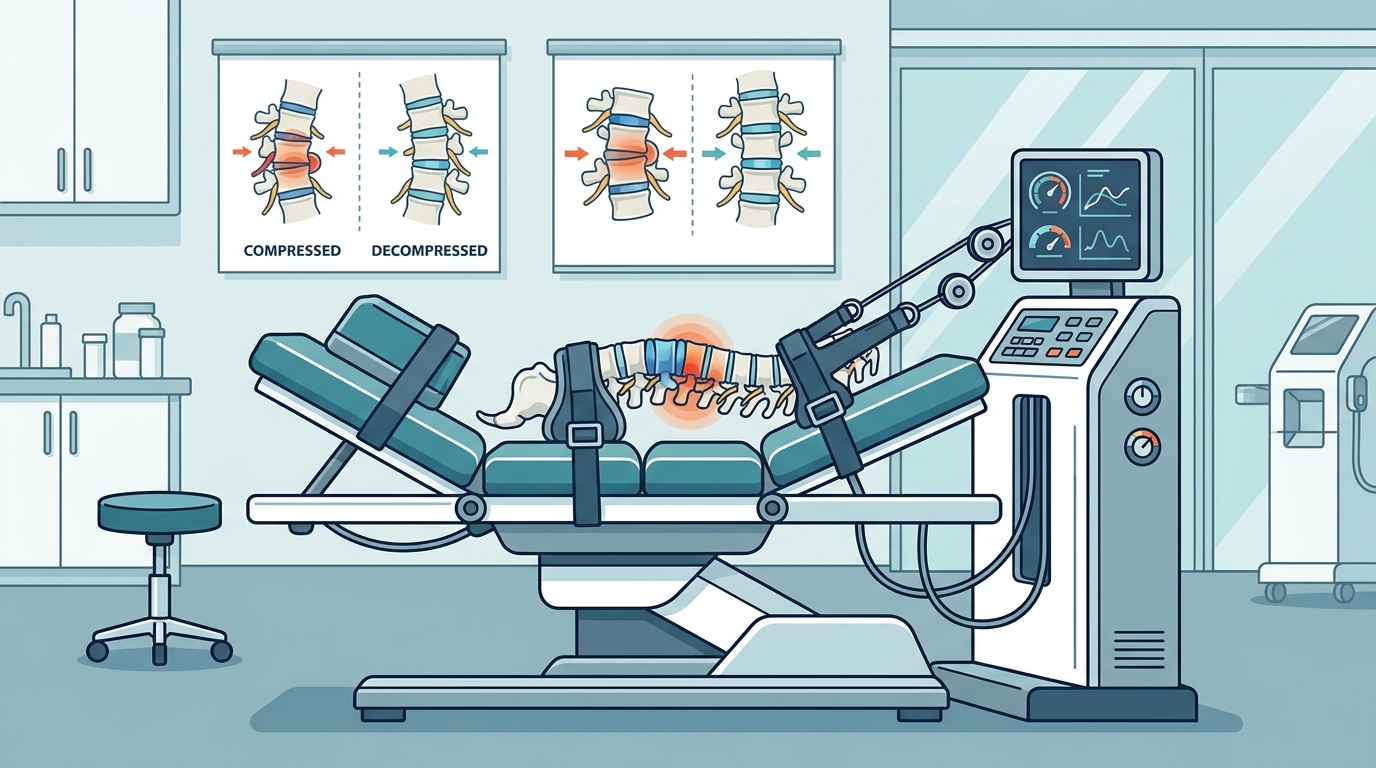
Understanding how spinal decompression works requires looking at the physics of the intervertebral disc. Spinal decompression is a non-surgical traction technique that uses computer-controlled forces to gently stretch the spine. Unlike standard traction, which often triggers a protective muscle spasm, modern decompression tables are programmed to lock onto the pelvis and apply force at specific angles. This precision allows the therapist to isolate the targeted vertebrae while minimizing movement in adjacent segments.
When the spine is stretched, the pressure inside the disc decreases. This creates a vacuum effect, often referred to as negative intradiscal pressure. This vacuum can pull herniated or bulging disc material back toward its center, relieving pressure on nearby nerves. Additionally, the increased space between vertebrae allows for better circulation of oxygen, nutrients, and fluids into the disc. Since discs have a limited blood supply, this influx of nutrients is vital for healing and repair.
At Oliver Pain Relief & Rehab, we utilize advanced technology to ensure that the force applied is both safe and effective. Our approach is designed to relax the muscles surrounding the spine, preventing the body from resisting the treatment. This relaxation is crucial for achieving the therapeutic depth needed to address deep-seated disc issues.
Disc Problems Treated
Spinal decompression is not a one-size-fits-all solution, but it is highly effective for several specific conditions related to disc health. The therapy is primarily indicated for issues where disc material has displaced and is impinging on neural structures.
Herniated Discs
A herniated disc occurs when the soft inner material of the disc pushes through the tough outer layer. This often results in sharp pain, numbness, or weakness in the limbs. Decompression therapy helps to reposition this material, reducing the mechanical load on the nerve root. For more details on how we handle disc injuries, our team can provide a personalized assessment.
Bulging Discs
Bulging discs are similar to herniated discs but involve a more generalized protrusion of the disc wall. This condition is common in the cervical and lumbar regions. By increasing the space between the vertebrae, decompression allows the bulge to recede, alleviating pain and restoring mobility.
Degenerative Disc Disease
As discs lose hydration and height due to aging, the spine becomes less stable. This degeneration can lead to chronic pain and arthritis. Decompression therapy helps to restore disc height and improve the overall biomechanics of the spine. It also stimulates the body's natural repair mechanisms, which can slow the progression of degeneration.
The Treatment Process
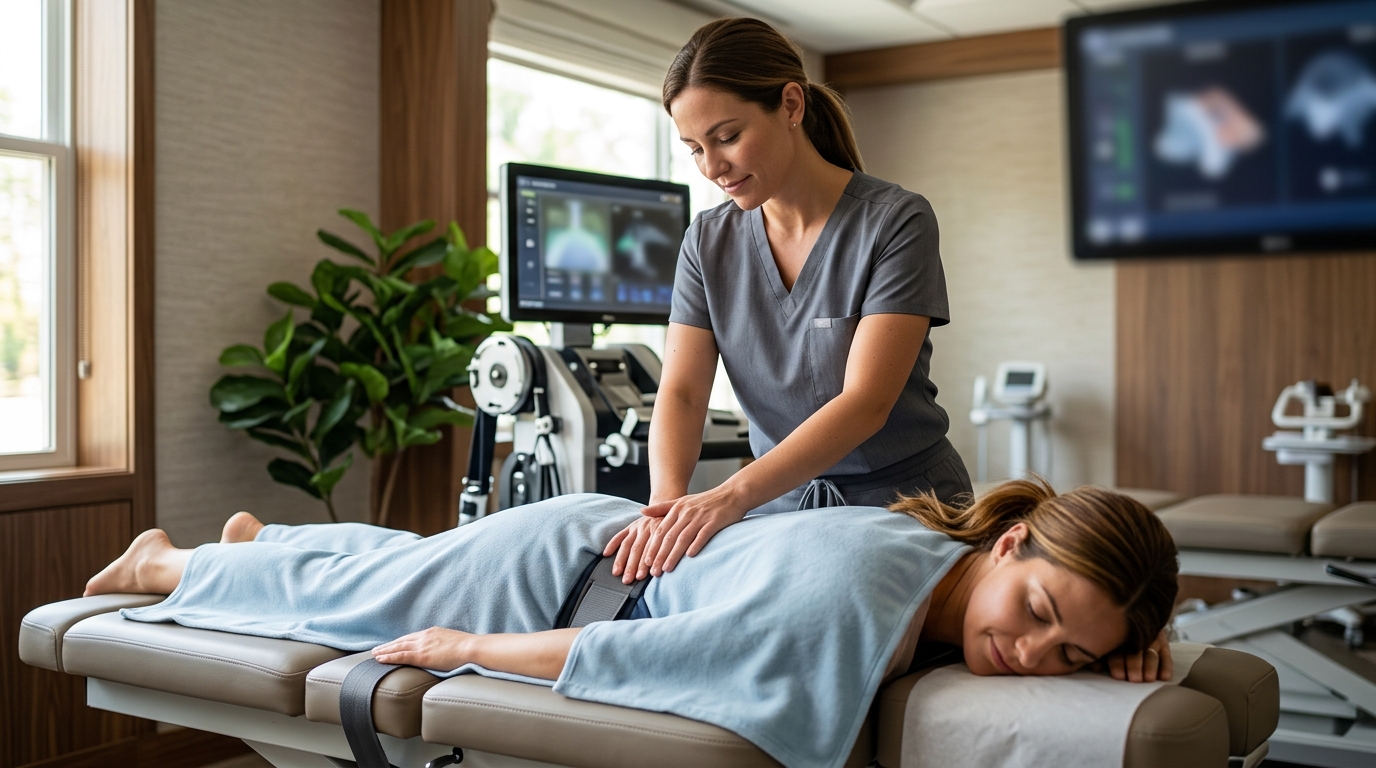
Patients often wonder what to expect during a session. The process is non-invasive and typically performed while lying on a specialized motorized table. The therapist will secure the patient's pelvis and/or torso to ensure precise force application.
Each session usually lasts between 20 to 30 minutes. During this time, the table will gently pull the spine in a rhythmic pattern. This pattern includes periods of traction followed by relaxation. The relaxation phase is critical because it prevents the muscles from contracting against the pull, which would negate the therapeutic benefits. Many patients report feeling a sense of relief during the first few sessions.
At our Herndon VA chiropractic office, we combine spinal decompression with other modalities to enhance results. For instance, we may integrate acupuncture to reduce inflammation and promote energy flow. This integrative approach addresses both the mechanical and physiological aspects of pain.
Comparison of Therapies
Choosing the right treatment path is essential for long-term recovery. Below, we compare spinal decompression with other common interventions.
Decompression vs. Surgery
Surgery is often considered the last resort for disc problems. While it can be effective, it carries risks such as infection, blood clots, and prolonged recovery times. Spinal decompression offers a conservative alternative that avoids these risks. Studies suggest that for many patients, decompression can provide similar pain relief to surgery without the invasiveness. Our back pain specialists evaluate each case to determine if decompression is a viable option before considering surgical referrals.
Decompression vs. Traditional Traction
Traditional traction involves pulling the spine with a constant force. This can cause the patient's muscles to tighten in response, reducing the effectiveness of the treatment. Spinal decompression, however, uses a dynamic force that locks onto the body and releases periodically. This method bypasses the muscle guarding reflex, allowing for deeper traction and more effective relief. For more information on our pain relief strategies, please contact our team.
| Feature | Spinal Decompression | Traditional Traction | Surgery |
|---|---|---|---|
| Invasiveness | Non-invasive | Non-invasive | Invasive |
| Muscle Guarding | Minimized via locking | Often triggers guarding | N/A |
| Recovery Time | Minimal | Minimal | Weeks to Months |
| Risk Profile | Very Low | Low | Moderate to High |
| Target Audience | Disc herniation, bulging | General stiffness | Severe structural damage |
Key Takeaways
- Spinal decompression creates negative pressure in discs to retract herniated material.
- The therapy is effective for herniated, bulging, and degenerated discs.
- Unlike traditional traction, decompression minimizes muscle guarding through precise locking mechanisms.
- At Oliver Pain Relief & Rehab, we combine decompression with acupuncture and physiotherapy for holistic care.
- Patients in Northern Virginia and Washington, DC can access this treatment without surgery.
- Early intervention can prevent the need for more invasive procedures later.
- Our blog offers additional insights into chiropractic care and pain management.
Frequently Asked Questions
Is spinal decompression painful?
Most patients find the treatment comfortable. The initial stretch may feel unusual, but it is not typically painful. The goal is to relieve pressure, not to cause discomfort. If you experience pain, our therapists will adjust the force immediately.
How many sessions are needed?
The number of sessions varies based on the severity of the disc problem. On average, patients may require 12 to 18 sessions over several weeks. Our team will create a customized plan during your initial consultation.
Can anyone receive spinal decompression?
While it is safe for most people, it is not suitable for everyone. Conditions such as fractures, tumors, or severe osteoporosis may contraindicate the treatment. A thorough evaluation is necessary to determine eligibility.
Does insurance cover spinal decompression?
Many insurance plans cover spinal decompression if it is deemed medically necessary. We recommend checking with your provider. Our office can also assist with billing inquiries to ensure you receive the benefits you are entitled to.
How long does it take to feel relief?
Some patients feel relief after the first session, while others may need several weeks. Consistency with the treatment plan is key to achieving long-term results. We also provide home care instructions to support your healing.
What is the difference between decompression and traction?
Decompression uses a computer-controlled, intermittent force that locks onto the body to avoid muscle resistance. Traction applies a constant force that may trigger muscle guarding, reducing effectiveness.
Can decompression treat neck pain?
Yes, spinal decompression can be adapted for the cervical spine to treat neck pain and headaches caused by disc issues. Our headache and migraine specialists can evaluate your specific needs.
Get Your Lifestyle Back
If you are suffering from disc-related pain, do not wait for it to worsen. Spinal decompression therapy offers a proven, non-surgical path to relief. At Oliver Pain Relief & Rehab in Herndon, VA, we are dedicated to helping you regain your mobility and quality of life. Contact us today to schedule your consultation and discover how we can help you heal.