

Chronic back pain affects millions of people globally, often stemming from damaged intervertebral discs. According to the American Academy of Orthopaedic Surgeons, back pain is one of the most common reasons for missed work days and medical visits. Spinal decompression therapy offers a non-surgical solution by gently stretching the spine to relieve pressure on these critical structures. This process allows nutrients and oxygen to flow back into the disc, promoting natural healing without invasive surgery.
What Is Spinal Decompression?
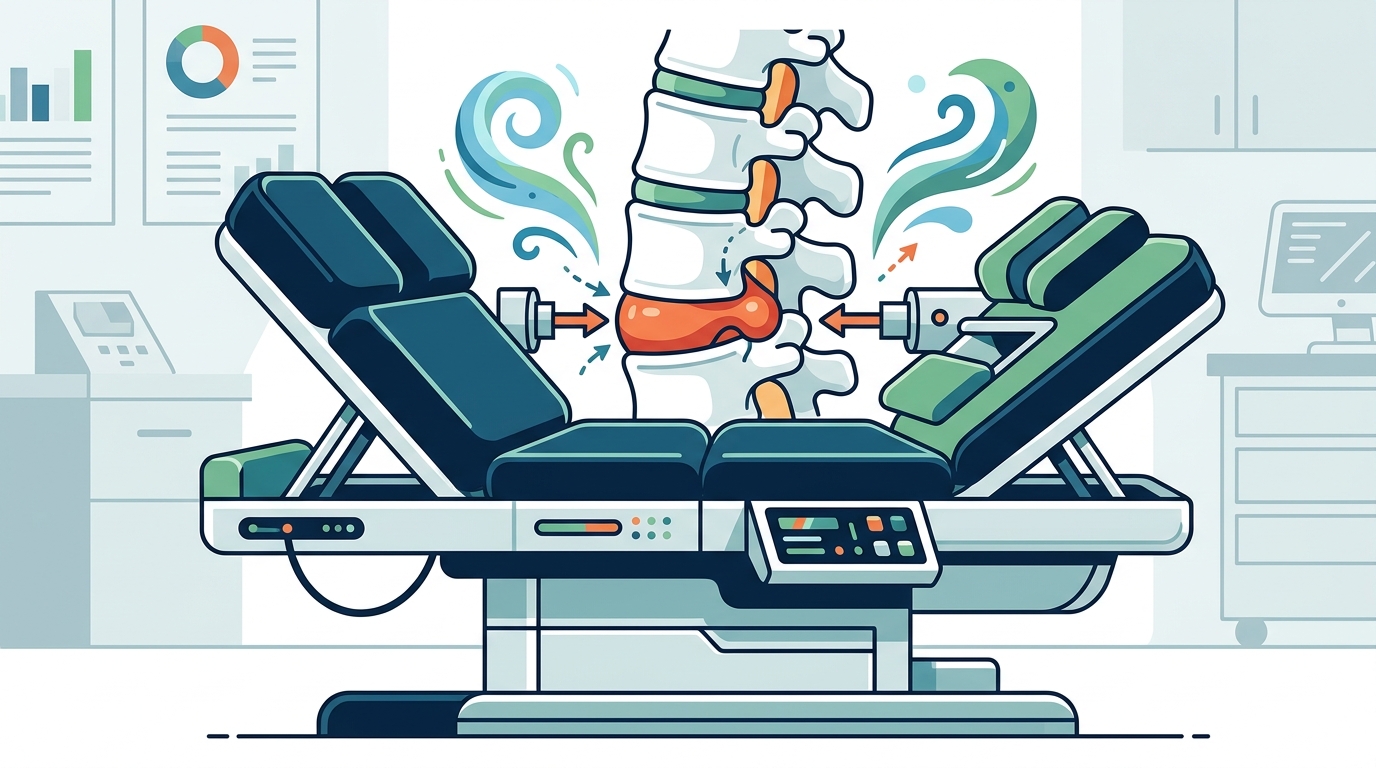
Spinal decompression is a specialized form of traction therapy designed to treat herniated, bulging, or degenerated discs. Unlike standard traction, which applies constant force, decompression uses computer-controlled angles and forces to create a vacuum effect within the disc space. This vacuum pulls the herniated material back toward its center, reducing pain and inflammation.
At Oliver Pain Relief & Rehab, we utilize advanced technology to ensure precise application of this therapy. Our approach focuses on natural pain relief by addressing the root cause of the discomfort rather than just masking symptoms. This method is particularly effective for patients in Northern Virginia and Washington, DC, who seek alternatives to surgery.
The Mechanism of Action
The core principle behind spinal decompression is the creation of negative intradiscal pressure. When the spine is stretched at specific angles, the pressure inside the disc drops below atmospheric pressure. This negative pressure acts like a suction cup, drawing the bulging disc material inward.
Targeting the Nucleus Pulposus
The nucleus pulposus is the gel-like center of the intervertebral disc. When this area is damaged, it can press against nearby nerves, causing pain. Decompression therapy specifically targets this area by relieving the pressure that causes nerve impingement. This relief allows the outer layer of the disc, the annulus fibrosus, to begin the repair process.
Relaxing Muscular Guarding
Pain often causes muscles to spasm in an attempt to protect the injured area. This "guarding" can worsen the pain and restrict movement. Decompression therapy gently stretches these muscles, breaking the pain-spasm cycle. This relaxation allows for better blood flow and reduces the overall tension in the spinal column.
The Disc Healing Process
Discs have a limited blood supply, which makes them slow to heal naturally. However, when pressure is relieved, the environment changes to favor healing. The negative pressure created during therapy draws in oxygen, nutrients, and fluids that are essential for tissue repair.
According to research published in the Journal of Neurosurgery: Spine, non-surgical decompression can significantly reduce disc herniation size. This reduction in size alleviates pressure on the spinal nerves, leading to faster pain relief. The body's natural healing mechanisms are then able to work more effectively in the absence of constant mechanical stress.
Rehydration and Nutrient Exchange
Healthy discs are hydrated and nutrient-rich. Degenerated discs are often dehydrated and starved of nutrients. Decompression therapy facilitates the exchange of fluids and nutrients between the disc and the surrounding tissues. This rehydration helps restore the disc's height and shock-absorbing capabilities.
Conditions Treated by Decompression
While spinal decompression is most commonly associated with back pain, it is effective for a variety of spinal conditions. It is particularly useful for issues originating from the cervical (neck) and lumbar (lower back) regions.
Herniated and Bulging Discs
These are the primary targets for decompression therapy. When a disc bulges or herniates, it can press on nerves, causing radiating pain. Decompression helps retract the disc material, reducing this pressure. Patients often report significant relief after just a few sessions.
Sciatica and Radiculopathy
Sciatica is caused by compression of the sciatic nerve, often due to a herniated disc. By relieving the pressure on the nerve root, decompression therapy can alleviate the shooting pain, numbness, and weakness associated with sciatica. This approach is detailed further in our sciatica treatment guide.
Facet Joint Syndrome
Facet joints can become inflamed and painful due to degeneration or injury. Decompression therapy can help by reducing the load on these joints, allowing them to heal and function more normally. This is often combined with other therapies for comprehensive care.
Therapy Comparison and Options
Understanding how decompression compares to other treatments helps patients make informed decisions. Below is a comparison of common approaches to disc problem management.
| Treatment Type | Mechanism | Invasiveness | Recovery Time |
|---|---|---|---|
| Spinal Decompression | Negative pressure to retract discs | Non-invasive | Minimal to none |
| Surgery (Microdiscectomy) | Physical removal of disc material | Invasive | Weeks to months |
| Medication | Chemical pain relief | Non-invasive | Immediate |
| Physiotherapy | Strengthening and mobility | Non-invasive | Gradual |
While surgery is often seen as the last resort, decompression offers a viable middle ground. It avoids the risks associated with anesthesia and infection. Furthermore, it addresses the mechanical issue directly, rather than just managing symptoms. Many patients find that combining decompression with acupuncture enhances the overall healing outcome.
Key Takeaways
- Spinal decompression creates negative pressure to retract herniated disc material.
- The therapy promotes natural healing by increasing nutrient and oxygen flow to the disc.
- It is effective for herniated discs, sciatica, and facet joint syndrome.
- Non-surgical decompression avoids the risks and recovery time of surgery.
- Combining decompression with physiotherapy and acupuncture yields optimal results.
- Oliver Pain Relief & Rehab serves patients in Northern Virginia and Washington, DC.
- New patients can take advantage of special offers to begin their recovery journey.
Frequently Asked Questions
Is spinal decompression painful?
Most patients find the therapy to be relaxing and painless. The computer-controlled system ensures that the force applied is within a safe and comfortable range. Any initial discomfort usually subsides quickly as the muscles relax.
How many sessions are needed?
The number of sessions varies depending on the severity of the disc problem. Typically, patients undergo 12 to 20 sessions over a period of four to six weeks. Your chiropractor will create a personalized plan based on your specific needs.
Can decompression cure disc herniation?
While it may not "cure" the disc in the sense of making it look brand new, it can significantly reduce the herniation size and alleviate symptoms. Many patients achieve long-term relief and return to their normal activities.
Is it safe for everyone?
Spinal decompression is safe for most people, but it is not suitable for everyone. Conditions such as fractures, tumors, or severe osteoporosis may contraindicate its use. A thorough evaluation is necessary to determine eligibility.
How does it differ from traction?
Standard traction applies constant force, which can trigger muscle guarding. Decompression uses intermittent, computer-controlled forces to avoid this reflex, allowing for deeper disc retraction and muscle relaxation.
Does insurance cover spinal decompression?
Many insurance plans cover spinal decompression therapy, especially when deemed medically necessary. It is best to check with your provider and our office to understand your specific coverage details.
What is the success rate?
Studies suggest that a significant percentage of patients experience substantial pain relief. Success rates vary based on individual factors, but many patients report improved quality of life and reduced reliance on pain medication.
Get Your Lifestyle Back
If you are suffering from disc problems, spinal decompression therapy may be the solution you have been looking for. At Oliver Pain Relief & Rehab, we are dedicated to helping you achieve lasting pain relief and improved mobility. Our team of experts is here to guide you through every step of your recovery.
Take the first step toward a pain-free life. Contact us today to schedule your consultation and learn more about our specialized care options. We serve patients in Herndon, VA, and the surrounding areas with compassionate, evidence-based treatment.